Power Prayers
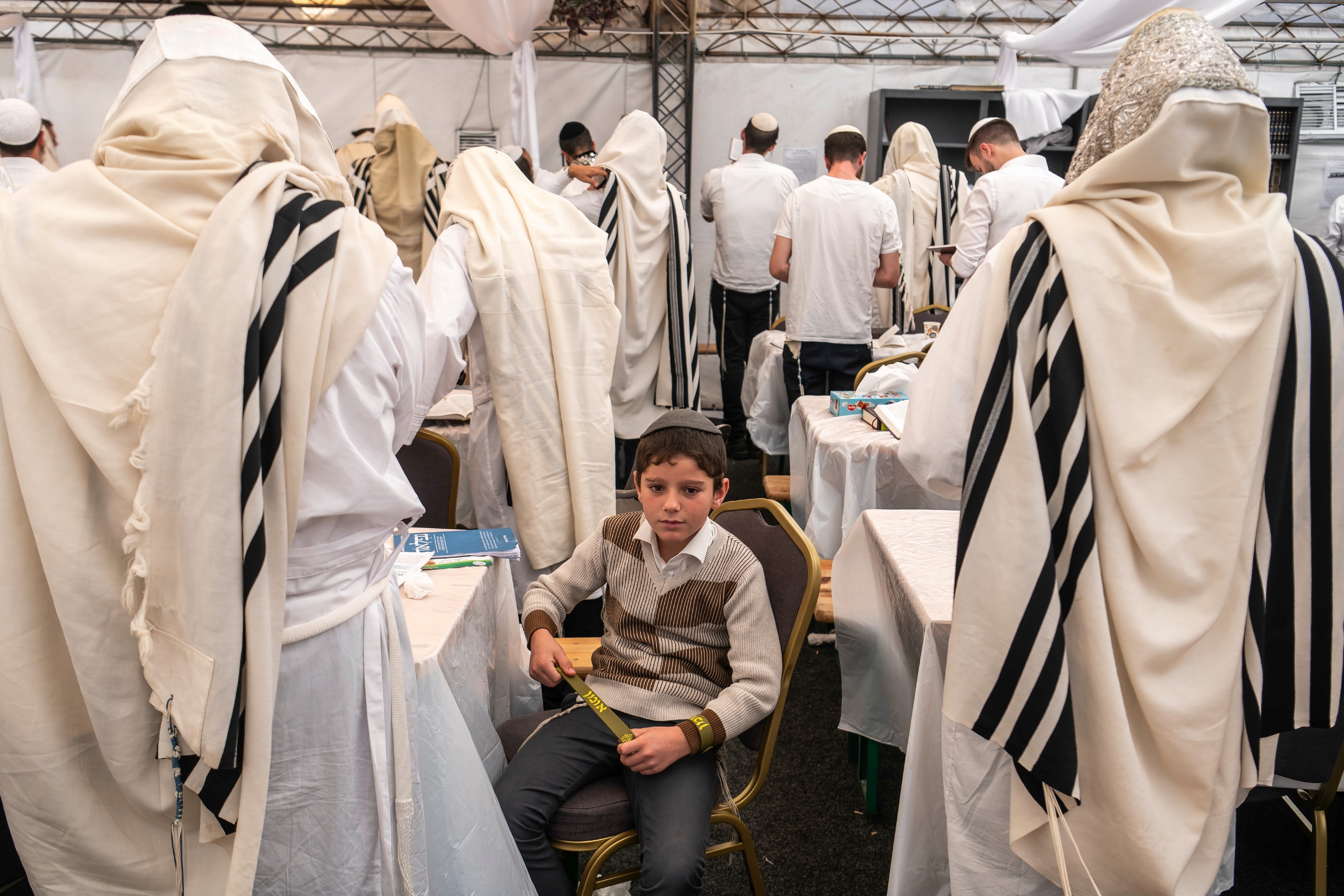
On each day of Chanukah, we recite the full Hallel during Shacharit prayers. This beautiful tefillah, often sung, is a heartfelt expression of praise and gratitude to Hashem for His kindness the countless miracles He has performed in the past, continues to perform today, and will perform in the future.
The tefillah “Al Hanisim” is added to Shemoneh Esrei as well as Birchat Hamazon (blessing after bread). “Al Hanisim” summarizes the story of Chanukah and speaks about our thankfulness to Hashem for the miracles and kindness He did for the Jewish people during the time of the Maccabees. If you forgot Al Hanisim in bentching or Shemoneh Esrei, it is not repeated, but there is a special harachaman that can be recited at the end of bentching.
Legacy Of Yehudit: Why Eat Dairy Foods?
The custom to eat dairy on Chanukah comes from the incredible story of Yehudit, a widow living in Jerusalem in Israel during the Greek oppression. The city was suffering terribly from the wicked Assyrian-Greek general Helifornus, who had cut off the city’s food and water supply. The Jews in the city were going to die!
Yehudit secretly went into the Greek camp and told Helifornus that she would give him secrets about the Jewish army. He believed her and even threw a party in Yehudit’s honor. Later, Yehudit was alone with the general, and served him salty cheeses that made him thirsty, and strong wine that made him drunk and sleepy. When Helifornus was asleep, she took his sword and decapitated him!
Yehudit then snuck out of the camp with the head of Helifornus hidden in her basket and brought it back to the city. The Jews displayed Helifornus’s head on the city walls, and in a panic, the army ran away! To remember and celebrate the brave actions of Yehudit, and her willingness to do whatever it takes to save her city, we eat cheese on Chanukah. Many have the custom of eating cheese “latkes” fried in olive oil to commemorate both the miracle of the oil and Yehudit’s bravery.1
Yummy Foods
Although not required, it is customary to have special, festive meals on Chanukah. We sing songs that thank and praise Hashem, which makes the meal into a seudat mitzvah. Chanukah parties should be combined with words of Torah to show that the true miracle of Chanukah was the triumph of Torah.
Latkes
Potato latkes have become synonymous with Chanukah! These fried circles of delicious goodness are perfectly crisp on the outside, soft on the inside, and absolutely addictive! You can’t just have one! The reason why we eat latkes is really to celebrate the oil more than the potato! In fact, potatoes were only part of the Jewish diet for the last 500 or so years, while Chanukah has been celebrated for more than 2,000 years. Before potatoes, Chanukah was celebrated with fried cheese latkes, pancakes, or other vegetables. But since potatoes were delicious, inexpensive, and easy for everyone to access, they became a staple on every Chanukah table.
Doughnuts
The minhag (tradition) to eat doughnuts goes as far back as the time of Rabbi Maimon,
the father of the Rambam, who lived in the 1100’s! In order to commemorate the miracle of the long-lasting oil, we eat oily (that is, fried) foods. Years ago, the most common food to fry was dough, and the sufganiyah, or doughnut, was born! Whether filled with custard or jelly, plain or powdered, the custom to eat doughnuts is one that we are delighted to uphold.
Dreidels
What would Chanukah be without a dreidel game? Legend has it that the Jews would hide in caves around Israel to study Torah, since the Greeks would kill anyone they found learning Torah. These brave Jews would keep dreidels with them, so that if a Greek soldier would come across them, they could quickly hide their scrolls and pull out an innocent spinning top, pretending to be playing instead of learning. Nowadays, we play dreidel to remember their bravery and willingness to risk their lives for the study of Torah!2
Chanukah “Gelt”
Giving gifts of money, called “Chanukah gelt,” is an ancient tradition, although we do not know the exact source. It may be because tzedakah (charity) was often given to those who could not afford oil for their menorahs, or because Chanukah is a special time for Torah study and we
are rewarding the children for studying Torah. In any case, giving Chanukah gelt is an exciting and time-honored part of Chanukah and continues to this day! There is no real source for Chanukah gifts, although it is probably in place of Chanukah gelt. Instead of giving children money to buy themselves toys, many parents skip the part of taking their kids to the store and just give the gift!
Special For The Women
It is customary for women not to do work (activities like sewing or laundry) for the first half hour after lighting the candles. This serves as a reminder that the light of the Chanukah candles cannot be used for any other purpose. The women took on this custom since they had an important role in overcoming the Greeks.
Pure Olive Oil
Pure olive oil is known in Hebrew as “shemen zayit zach,” and is made of the first drops of oil that come out of the olive. The Mishnah states3 that there are 3 olive crops and there is nothing better than the first oil of the first crop. It then goes on to explain the process of making olive oil.
- The fully ripe olives from the top of the tree are picked.
- The olives are brought to the olive press and are crushed, not ground in a mill.
- The olives are then placed in baskets.
- The oil that oozes out of the baskets without being squeezed is shemen zayit zach.
- The olives are then pressed with a beam, and the oil that drips out of the baskets is considered the second grade of oil.
>> Learn All About Chanukah in Chanukah Part 1 and About The Laws Of Lighting Menorah in Chanukah Part 3
Excerpted from Oorah’s Torah Nuggets
Chanukah Customs – Sources:
1 Rema Hilchot Chanukah 670 citing Kol Bo and Ra”n
2 See Otzar Kol Minhagei Yeshurun 19:4 By Rabbi Avrohom Elazar Hershovitz Ish Kovna
3 Menachot 8:4, 86a