Time Belongs to You
In addition to the weekly portion, this week we read the section in the Torah regarding sanctifying the months of the Jewish calendar.
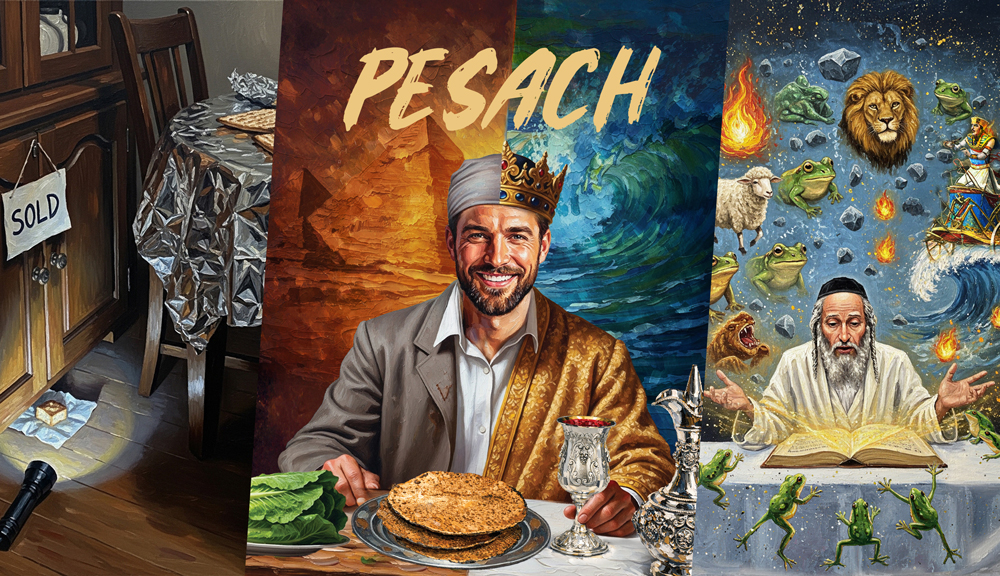
When the Jews were still in Egypt, as they were nearing their exodus, God said to Moshe (Moses) as follows (Shemot 12:2): “This month shall be for you the head of the months, the first for you of all the months of the year.”
The Sforno comments on the language used in this verse. What does it mean that it is “for you?” The Sforno says that God was telling the Jewish people that while they were enslaved in Egypt, their time did not belong to them. Their days belonged to the Egyptians who controlled them and used them for their own desires. However, from now on, God said to the Jewish people, the months belong to you; your time is for you to utilize. Therefore, the month of the Exodus is befitting to be the first of the months. For this is the month when we began having a new existence in which we can utilize our time in accordance with our own free will.
Seemingly, God is addressing here a unique aspect of the freedom which the Jews were about to experience. It wasn’t simply about no longer having their personal decisions subjugated anymore to the Egyptians; it was about acquiring possession of their time. What is the significance of this particular freedom, the liberty of time?
Throwing Time Out the Window
Rabbi Noach Weinberg (rabbi and founder of Aish Hatorah) would say, “Imagine you were sitting on a bus, and you saw someone throwing money out the window. Every few seconds the fellow threw another dollar out the window. You would look at this person as if he is out of his mind! Is a person who lets his time go by without accomplishing anything any different from him? A person just sitting around, letting his mind wander aimlessly, is throwing time out the window. Time is life. One who wastes his time is throwing life out the window!”
Every moment of a person’s life is an opportunity to accomplish. While the Jews were enslaved in Egypt, their time did not belong to them, and they were very limited in what they could achieve in personal growth. Their liberation from Egypt put their time in their possession, enabling them to utilize their lives for their own real accomplishments. And so, it is most befitting that the initiation of our possession of time is what marks the beginning of the calendar, which organizes and keeps track of our time.
Money Is Time
The Chofetz Chaim once commented to someone, “In America they say, ‘Time is money,’ and I say, ‘Money is time!'” Time is not for earning money; money is for utilizing time. Money is a necessity in order to live, not an end unto itself. The focus must always remain on what we are actually living for. Having money gives us time to use to grow in our character and come closer to God.
The Talmud (Gittin 47a) illustrates this point as follows: When Reish Lakish died, he owned nothing but a small amount of saffron. Not only was he not disappointed about the fact that he failed to amass materialistic property, he bemoaned the little which he actually had and did not end up needing. In expression of his disappointment for having attained an object which he did not exploit, he proclaimed about himself the verse (Tehillim 49:11), “And they will leave their (hard-earned) assets for others.” Reish Lakish viewed the time and energy spent in attaining something he did not utilize completely as wasted efforts. If we use our time to earn money which we do not utilize, that time is a waste of life!
Using the Gift of Time
As we approach the month of Nissan, the month in which we were set free from Egypt, we should contemplate what freedom is about. Time is the most precious commodity we have. Time which passes will never return. Freedom is a gift which enables us to take control of our time and profit from it.
If we do not put a conscious effort into maximizing the efficiency of our time, there is no doubt that a lot of time will be lost forever. It is up to us to see to it that we utilize every moment of our lives productively. There is so much we can accomplish through studying Torah, contemplating Torah ideas, introspection, engaging in prayer, helping others, improving our ways, etc.
Life in this world is very limited. Can we afford to let any segments of our lives go to waste?
By Rabbi Yitzchok Aryeh Strimber torah4every1@gmail.com