The entire world heard about the spectacular miracles of Yetziat Mitzrayim (the Exodus from Egypt). As the verse says, “The nations heard and trembled” (Shemot 15:14). Yet for most of them, the impact quickly faded, and life returned to business as usual.
Yitro Was Changed by the Miracles—but Not All at Once
Yitro, however, was different.
When he heard about these extraordinary miracles, he was deeply moved. Inspired, he rushed toward the Jewish camp in the desert. Upon arriving, he exclaimed, “Blessed is Hashem, Who saved you from the hand of Egypt…” and then declared, “Now I know that Hashem is greater than all the gods” (ibid 18:11–12).
Gratitude Before Clarity: Rav Elya Boruch’s Insight
Rav Elya Boruch Finkel raises a fascinating question. Logically, shouldn’t Yitro have first stated that he now recognized Hashem’s greatness—and only afterward said Baruch Hashem? After all, gratitude seems to follow recognition.
Rav Elya Boruch explains that Yitro became the remarkable person he was through a gradual process. Years earlier, when he hosted Moshe, he had already abandoned avodah zarah (idol worship), after having explored every form of it and recognizing its emptiness. Later, when he heard about the miracles of Yetziat Mitzrayim, he felt inspired to journey to the camp of Klal Yisrael (the Jewish nation). When he finally arrived and heard the full account of what had taken place, he first expressed heartfelt gratitude to Hashem. Only then did he reach a clear and unwavering recognition that Hashem is the greatest of all.
It was Yitro’s gratitude that helped him achieve the clarity he had been working toward for so many years. That gratitude elevated him and shaped him—so much so that the parashah (Torah Portion) of Matan Torah (the Giving of the Torah) bears his name
(MiShulchan Rav Elya Boruch, Vol. 1, p. 313).
Small Steps That Shape a Great Soul
Contained within this idea is a powerful, life-changing lesson. We cannot underestimate the power of a single thank you, because one thank you naturally leads to another. Gratitude envelops us in holiness and gently lifts us toward ever-greater heights.
Why the Seder Night Is Built on Repetition
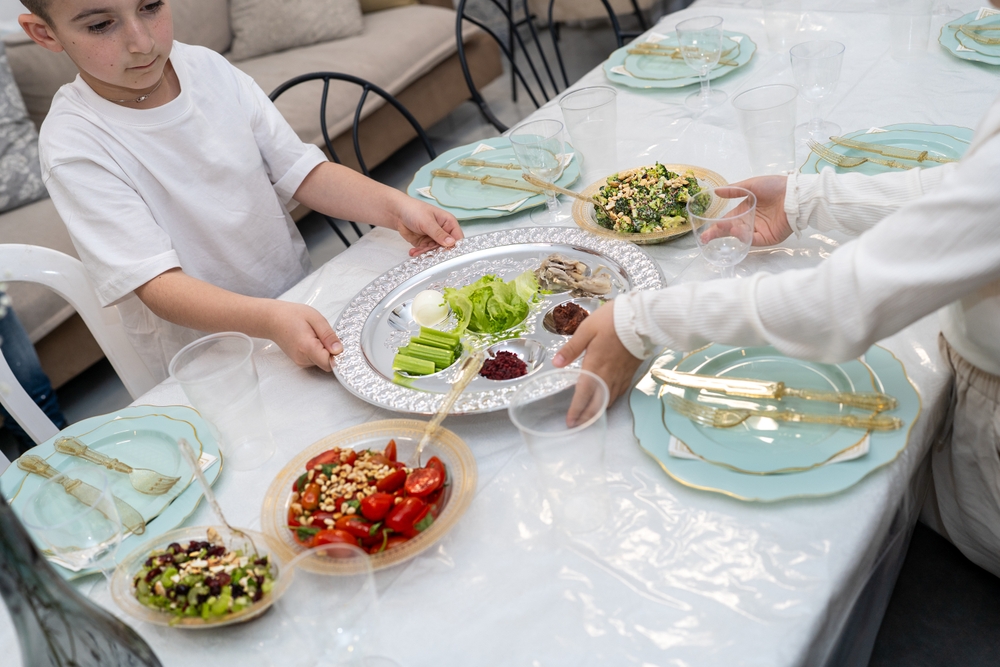
The Sefer HaChinuch (mitzvah 16) uses this principle to answer an intriguing question. Why, on Seder night, do we perform so many actions to awaken our memory and appreciation of the miracles of Yetziat Mitzrayim? Why not suffice with just one mitzvah? He explains that a person is shaped by their actions. Through repeated acts, our awareness and appreciation of those miracles grow stronger and deeper.
So too, every expression of gratitude—no matter how small or seemingly insignificant—refines us. Each thank you trains our hearts to notice more, feel more, and become more aware of Hashem’s love and constant involvement in our lives.
One Kindness Leads to Many Wonders
The Sefat Emet (Shabbat HaGadol 653) notes that this idea is hinted at in the verse:
“Hodu laHashem chasdo, venifla’otav livnei adam” —
“Thank Hashem for His kindness, and make His wonders known to mankind.”
The word chasdo (“His kindness”) appears in the singular, while nifla’otav (“His wonders”) is written in the plural. This teaches that thanking Hashem for even one kindness should naturally lead us to recognize and reflect on many more of His wonders.
A Modern Story of Gratitude That Healed a Life
Rabbi Fischel Schachter once shared a moving story. One Shabbat morning, he noticed a young man slowly approaching the bimah (Torah reading table) with a walker. The young man then performed Gelilah, rolling the Sefer Torah (Torah scroll), and the entire congregation burst into joyful applause. Rav Schachter sensed that there was a powerful story behind the moment.
The young man explained that just a few months earlier, he had been in a devastating car accident. He woke up in the hospital, surrounded by the constant beeping of machines. He couldn’t move, open his eyes, or speak, and his body was wrapped in casts and bandages. He immediately realized how critical his condition was and felt completely helpless.
Then he remembered something his rebbi (Torah teacher) had once taught him: when a person feels utterly broken, they should try to find even one thing to be grateful for.
He realized he could slightly move his right shoulder. That small movement awakened a deep appreciation for the priceless gift of mobility. He began making faint sounds, attempting to sing a quiet song of thanks.
The doctors were astonished. While they were far from optimistic about his future, these signs of life were incredibly encouraging. As bandages were gradually removed, the young man discovered he had more movement than he thought. He tried to sing more clearly, expressing even greater gratitude. Later, he realized he could see out of one eye—filling his heart with yet another wave of appreciation.
The recovery was slow and required multiple surgeries. But through it all, he never stopped thanking Hashem. The climax of that long journey came on this Shabbat, when he entered the synagogue and slowly approached the bimah with his walker. With tremendous effort and determination, he held the Sefer Torah and performed Gelilah. Overcome with gratitude for the miracle of his recovery, his joy was so genuine and powerful that it inspired everyone present
(as told by Rabbi Binyomin Pruzansky on storiestoinspire.org).
By Rabbi Daniel Shasha, author of “Living Appreciation”